Showing posts with label Amazon. Show all posts

Sunday, May 25, 2014

Amazon introduces a new way to buy books without leaving Twitter

Amazon has a new way to shop for books with out leaving Twitter.  All you have to do is connect your Twitter and Amazon accounts.

Then, when an author tweets an Amazon link for their book all you have to do is reply to the tweet and include #amazoncart. The book will be added to the cart on your Amazon account. When you’re ready to check out, go to your Amazon account and sign in all your fictional finds will be in your shopping cart waiting.

Okay, #amazoncart can be used for more than just books. As long as the tweet contains an Amazon link you can add it to your account’s cart with this magical new hashtag without leaving twitter.  

This simple little tool is going to be a great way for authors, and other vendors to sell their wares. Our marketing on Twitter usually includes a link to our books, now if a reader thinks it’s interesting they can toss it right into their #amazoncart.

When tweeting your books for potential readers, be cautious of which link you’re using. The link must be the full Amazon link or link automatically shortened by Twitter. Not a bitly or other shortened link by an outside source. Remember don’t include #amazoncart in your own tweet unless your book added to your own Amazon cart a zillion times. :)

So what do you include in a book tweet to tease shoppers?

Book title
Brief teaser such as: Tag line, brief snipit of dialog or text
Book Cover (you can upload the cover to your tweet directly on Twitter or Tweetdeck                     
                     and it will show in Twitter streams as an image and not a link to the image)
Amazon link

Here is an example of one of my book tweets…

How cool is that! Amazon has made things easier for their customers to make purchases but also has given authors an awesome new marketing tool!

So what are you waiting for go HERE to link your Twitter account with your Amazon account then get to twitter and add some books to your #amazoncart!


Saturday, April 5, 2014

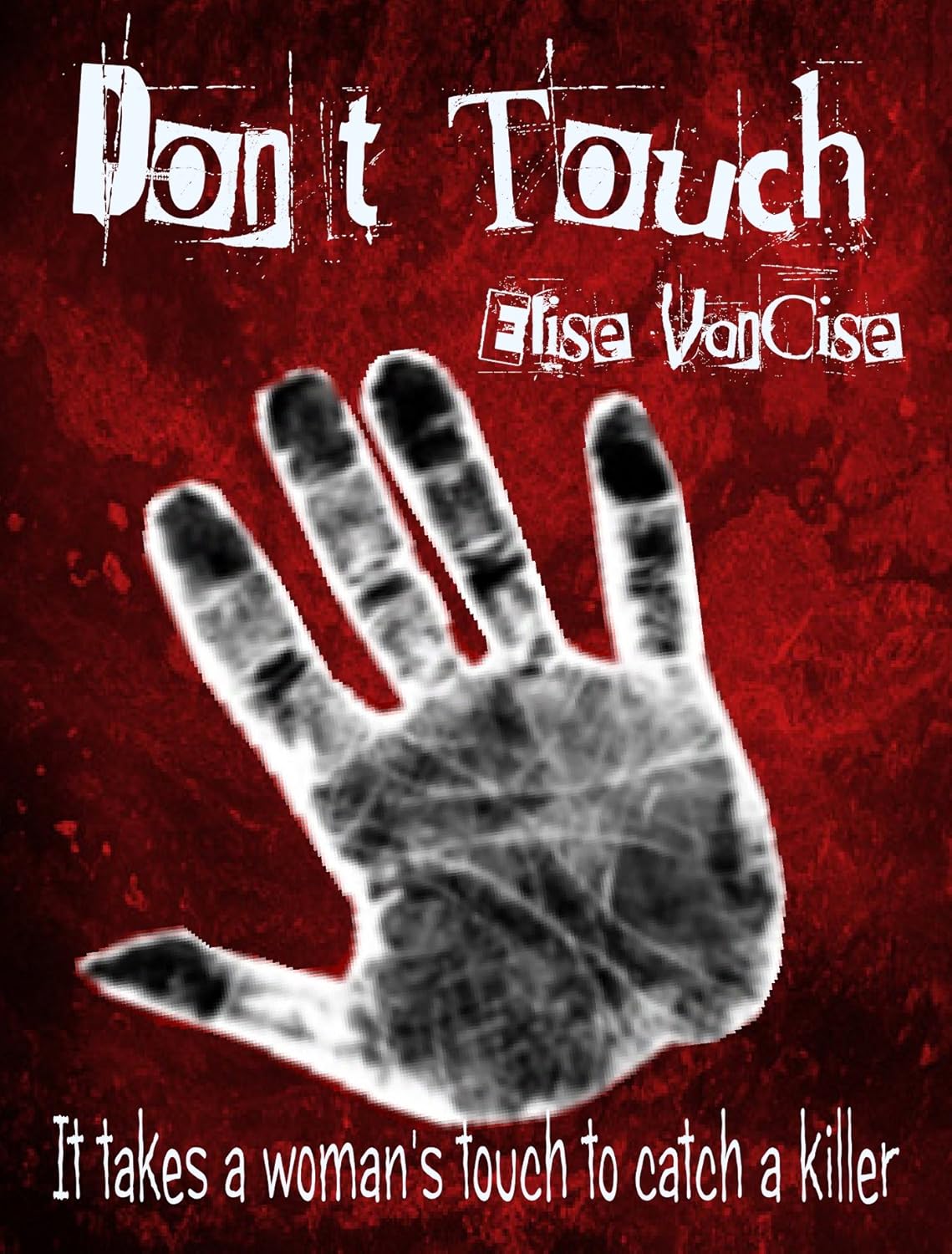
Don't Touch : Blogging from A to Z Letter D

About Don't Touch
Dr Ryan Reign has unlocked a gift she calls a curse. Detective Jackson Prince and his partner need her help to stop a serial killer before he murders again.

One problem Dr. Reign can't touch or be touched. She's become a recluse, never leaving her home for fear of what she might 'see'. Jackson knows he has to help her accept her gift or there will be more deaths. 

It takes a woman's touch to catch a killer.

 5 Star Review
Great book! Couldn't put it down kept me reading the entire book! I wanted to wait and read some later but I couldn't I had to finish. There was enough romance, mystery and intrigue to keep me anxious to finish and make sure they hot the bad guy!!! Can't wait to read more by Elise.

4 Star Review

Don't Touch was very enjoyable to read. The writing style, the plot, and the characters are all very good. Elise has quite the imagination! I like a mystery with a "twist". I think the story would be a great series for the future.

 Other places to stalk find Elise VanCise on the web
G+ 


Monday, July 23, 2012

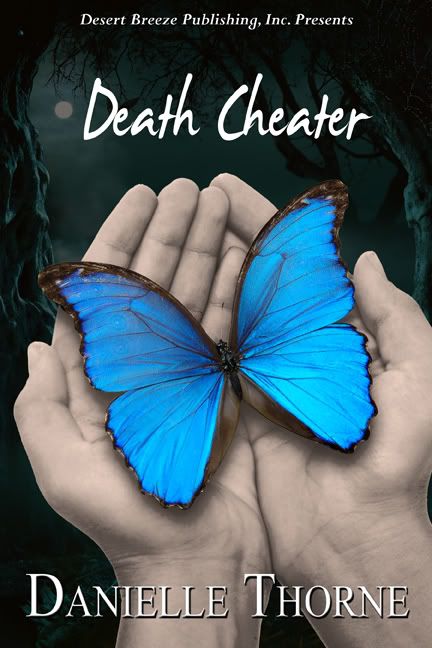
Danielle Thorne talks about Death Cheater on Glaidator's Pen


Pirates, biologists and ghosts… Oh my! The nice way of saying it, is "She's eclectic." And "she" would be Yours Truly. I'm a born romantic, but a suburban kid who grew up to be a busy mom and determined writer, destined to write about things besides spaghetti and grass stains. By thirty years old I took the leap from poetry and freelance writing into fiction. By thirty-five, I was reading Age of Sail books like Master and Commander and Horatio Hornblower and taking scuba classes. I never could bear to be like everyone else.

Much thanks to Elise and the Gladiator's Pen for allowing me to share news of my newest release, DEATH CHEATER, my first foray into the paranormal after writhing sea fiction and romance.

For me, my paranormal vision started after I visited some prehistoric Indian burial mounds. It was a haunting experience, and the town of Henderson, Tennessee, where I based my next novel, made a perfect small town setting.

Athena Gray lives vicariously through her sister because people in general avoid her. Whether it's strange things like dead butterflies fluttering to life, or the time she saved her dying grandpa just by willing him to live, Athena knows that she is different. The only person who doesn't seem to think so is Dan, the most popular boy on Omega High School's baseball team. But even Dan can't understand the reason she acts haunted, until a spirit roaming the local historic burial mounds takes an interest in people Athena cares about.

Athena is a strong, independent character who understands she doesn't have to fit in to be content with herself. She also knows that she has a gift. High school doesn't come easy though, because dealing with teen drama and her own social anxiety issues are as difficult as accepting her grandfather's death. With no parents to turn to and few friends, Athena has to dig deep when a dark angel enters her life at the worst time. And he doesn't just have information about who she is, he has demands.

Excerpt:

A low rumble echoed around me, and the tall, dark trees went still. Not even a leaf stirred. My heart hummed, and a tingle of apprehension made my palms damp. A snarl came from the shadow of a tangled thorn bush, and soft, padding footsteps shuffled in the late afternoon gloom. My breathing went ragged with fear. Maybe it was a raccoon or an angry squirrel.

Athena.

Whipping around, I stared hard into the murk. A voice. It sounded gentle, but at the same time it sent chills down my arms. I glanced up through the hooded canopy of tree branches and tried to see heaven.

God?

There was a growl, and the terror I'd been holding at bay zipped up my spine into my skull. I was sure my long hair stood on end, like when kids touched the electrostatic generator at the science museum.

Something was coming for me, and it wasn't something from the woods. It'd been following me all day. Maybe even my entire life.

Now don't be too concerned. Athena isn't left entirely to her own devices. Her older sister has her best interests in mind, and Dan Lipinsky, Athena's secret crush, seems determined to make her one of his closest friends.

Is there really such a thing as ghosts? Are there dark angels intent on making us miserable? How many of us have abilities we haven't embraced? DEATH CHEATER is an exploration into forces from the other side and our power to choose what is right over what they would influence us to do. Meet Athena Gray today and find out more.


Check out DEATH CHEATER at Amazon.com

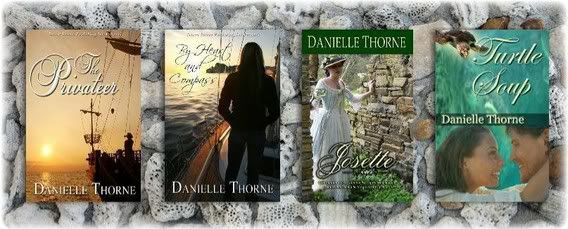
More Books by Danielle Thorne

Turtle Soup; 5 Star Environmental Romance. (Available at Smashwords, B&N and more)

The Privateer; Historical Adventure (Available at Amazon.com, Desert Breeze Publishing, B&N and more)

By Heart and Compass; Award Winning Contemporary Romantic Adventure (Available at Amazon.com, Desert Breeze Publishing, B&N and more)

Josette; Jane Austen-inspired Regency (Available at Amazon.com, Whimsical Publications, B&N and more)

Death Cheater; YA Paranormal (Available at Amazon.com, Desert Breeze Publishing, B&N and more)

Southern Girl, Yankee Roots; Poetry (Amazon.com and Willow Moon Press)

Tuesday, July 10, 2012

Author Chat with Joyce Harmon


Today we're welcoming author Joyce Harmon to the Ludis! So sit back with your cuppa and enjoy our chat as we talk about Joyce's Winery series and latest 

When did you first consider yourself an author?
Oh, always! I was writing Star Trek fanfic (though I didn’t know to call it that) in junior high. Back then, there was nothing to do with your stories, though. You just wrote them out in long hand and let your friends read them.
  
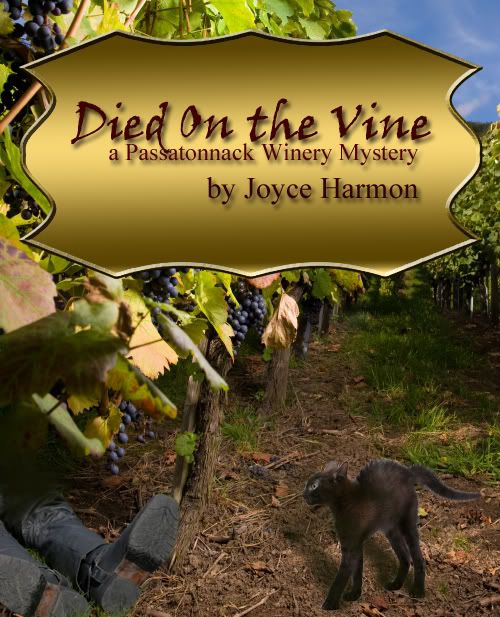
Tell us a bit about your latest work Died on the Vine. 
Update! Died On The Vine now has a sequel! Look for the further adventures of Cissy and her friends in Bidding On Death.

But back to Died On The Vine. I actually wrote this book in the mid-90s. I was planning to submit it to publishers and agents. But when I finished the story, it was too short for submissions – mystery publishers wanted works of at least 60,000 words, and Vine was around 45,000. So I needed to make it longer. The other problem was that I had made the story very ‘up to date’ and in the mid-90s, what was up to date seemed to change every day. Just when I’d updated something, something else changed and had to be updated – it was a moving target. Another difficulty was that I had a Vietnam War backstory, and as time went on, my characters would wind up being too old. Life ensued and the manuscript got filed away.

Then last year, I realized that I’d been calling myself a writer all my life and didn’t really have anything out there for people to read, and it was time to get serious. (I’d had a diversion for a number of years writing screenplays, none of which sold of course.) I decided that 2012 was going to be The Year Of The Writer. And with the advent of ebooks, getting published was much more plausible and your story could be any length it needed to be.

At that point, I remembered, hey, I wrote a novel once – and I dug out Died On The Vine, the original manuscript without all my attempts to bring it up to date. I reread it and the stuff that had looked outdated ten years ago now looked (IMO) like quaint period detail.  I only had the paper manuscript, since it was written many computers and several word processing softwares ago, so I had to retype the whole thing. But I kept it as it was, set it in 1996, and wrote a present day prologue and epilogue.

I published it via Smashwords and Amazon, and it’s available on all the ebook platforms. So far it’s doing pretty well, especially on Barnes and Noble.
  
What inspired your setting of a Virginia Winery?
I retired from the Navy in the mid-90s. My first post-retirement job was at the local winery. I took tourists on tours of the winery and conducted wine tastings. It seemed to me that it would be a neat location for a mystery, so I wrote one.

I’m still milking my own experiences for story fodder. After the winery, I worked as a local newspaper reporter, and then I spent a number of years as an eBay seller. I would go to the local auctions and buy things to resell on eBay. I used that experience for my sequel, Bidding On Death, where Cissy and her friends becoming involved in on-line auctions. I set Bidding On Death in 1998.

Did you learn something new about yourself or the craft of writing while working on this story, if so what was it?
I don’t know if I actually learned anything new, but I relearned how much I enjoy creating a fictional world and immersing myself in it. My stories always contain humor and I tend to crack myself up.

How would you spend a day inside of your book?
I’d track down Cissy and Julia and see what they were up to – which is usually pretty interesting. Maybe play with Polly the dog and Tough Stuff the cat. And I’d make sure to find time to stop by Della’s Kountry Kitchen for some pie.

Do you write every day or when the muse hits?
I try to write every day when I have a story in the works. Some days it’s harder to get going than others. When I’m really in the middle of it, I try to keep to a weekly word count goal, though that resolution has been more broken than kept recently.

How do you develop plots and characters? Do you have a set formula?
I don’t think I have an actual formula. I usually get a premise first, and then form the characters who’d have to deal with that premise. With my winery mysteries, I now have a set group of characters, though I expect each new mystery will introduce new ‘regulars’.

If you could spend time with any writer living or past who would it be and why?
Michio Kaku. I have a bit of a crush on him anyway, and maybe in person he could explain string theory to where I understood it.

Do you have any works in progress you can share with us?
I have premises for several more winery mysteries, but right now I’m trying something different. I’m writing a Regency romance. My mysteries are very breezy and informal, so Regency is quite a change of pace. It’s much more formal and mannered. My intent is to write a pure Heyer-style comedy of manners – no sex scenes, no time travel, no vampires or zombies.

After the Regency, I might write the next mystery, but I also have a screenplay I plan to novelize – science fiction action-adventure.

Is there something you would like to say to readers and/or fellow writers?
Just that writing should be fun. I can’t give a lot of career advice because I’ve just recently started putting my work out there, and I have no idea whether or not I’m on the right track to writing success. It’s all a crapshoot anyway, so the key is to enjoy the process; that way, if it doesn’t lead to fame-n-fortune at least you enjoyed what you were doing. When I see people on writing discussion groups saying resignedly that they supposed they’d better write a young adult paranormal romance because that’s what’s selling these days, and I know that they don’t particularly enjoy young adult or paranormal or romance - ! Sheesh. Write the sort of stuff you’d want to read!

Where can we find Joyce Harmon and your books? 

Readers hurry over to Joyce's blog The Village Wordsmith! She is giving a way 10 copies of Died on the Vine so hurry and don't miss out. Next week she will be giving away Bidding on Death!


Tuesday, July 3, 2012

Chat with author Mary Ann Bernal and WIN a SIGNED copy of The Briton and the Dane: Legacy


We welcome Mary Ann Bernal to the ludis today She has a very special treat for one lucky reader as well. You have a chance to win a signed print copy of The Briton and the Dane: Legacy. For your chance to win just leave a comment below with your email or twitter handle. On Friday we'll draw the name out of my magic chest and announce the winner! 

Now refill that sweet tea and get comfortable as we chat with Mary Ann Bernal.... 

We’re here today to celebrate your series The Briton and the Dane. The books are set in ninth century Anglo-Saxon Britain.  What about this period of history that fascinates you the most?
What intrigued me was how King Alfred managed to keep his kingdom of Wessex free from Viking rule despite the odds of conquest.  This was also a time when Christianity was replacing pagan religions, and the role conversion played in the political arena.  When King Alfred defeated the Danish Viking King Guthrum, one of the terms of the treaty was baptism, which King Guthrum agreed to, having King Alfred as his sponsor / Godfather.

Did King Guthrum willingly accept the one true faith?  Probably not, but it was politically expedient to do so.  Even though this was a time of unrest and instability, King Alfred managed to establish a standing army while he built up his defenses, created and enforced new laws and founded schools to ensure a competently-ruled kingdom after his death.  His reign lasted 28 years, dying at age 50. King Alfred left a legacy difficult to replicate, deserving the title Great.  Yes, I am one of King Alfred’s greatest supporters.

Tell us a bit about the book/s..
The Briton and the Dane trilogy follows the adventures of Lord Richard and his offspring, Stephen, David and Gwyneth.  King Alfred has just defeated King Guthrum, the terms of the treaty have been agreed to, and King Guthrum has already been baptized.  However, the Danish King still remains on Wessex soil, making preparations to return to his lands in East Anglia.

The story begins with Gwyneth atop the Keep in the early evening hours, enjoying the solitude when she sees movement on the beach. Of course she must investigate, which is how she meets Erik, who is wounded.  She hides her Danish Prince from her father, Lord Richard, who oversees a training camp for King Alfred’s recruits, aided by his sons, Stephen and David.  Gwyneth tends to Erik’s wounds in secret, while rumors of a Viking invasion are spreading throughout the countryside.

This epic adventure runs the gamut of deception, treachery, intrigue, and betrayal during a time of war and conquest, requiring three novels to complete the story.  I enjoyed every moment writing the saga.

What was your favorite resource for historic information during your research?  
“The Anglo-Saxon Chronicle” and Asser’s “Life of King Alfred and Other Contemporary Sources.”  Documentation of this era is sparse because monastic libraries were burned during the Viking raids.
  
If you were to be dropped into The Briton and the Dane for a day what would you do?
In “The Briton and the Dane: Birthright,” we have the Festival of the Ancient Games, which includes a Roman chariot race.  Did Alexander from the Papal City of Rome defeat Draco of Athens - you’ll have to read the story to find out, but my champion did win. 

Do you have a writing routine or ritual you follow?
My writing routine varies.  Initially I would write in the morning but soon found myself working eight to twelve hour days - once in Wessex, I did not want to leave.  Changing the time to afternoon did not help much either because I found myself burning the midnight oil.  So, I followed Stephen King’s advice to write a few hours a day, every day, and once your word count goal is reached, you are done, because life beckons.

The ninth century is vastly different from today from language, customs, even the every day activities. Do you find it difficult to write in a historic period or is it easy to submerse yourself there?
After three novels I am so immersed into ninth century Wessex that I sometimes have to reword emails or letters, but occasionally I just keep a favorite word.  I find I have used “I am not privy to this information” quite a bit lately, but for the most part, when I return to this century I make a concerted effort to remain here.

What are three things ever present in your writing space?
My children found an electronic typewriter table that is adjustable, which is fantastic for keeping back and neck issues to a minimum.  If I sit too long, I can raise the table and stand - how great is that!  I am also surrounded by my characters - I did cast every person in my novels, all dressed in period clothing, all demanding more dialogue.  No wonder my characters take over!  My IPod constantly plays period music, which keeps me in Wessex.  Some of the soundtracks are from King Arthur, Beowulf, The Last Legion, Centurion, The Eagle, Outlander, Tristan & Isolde, Merlin - and the list goes on and on, and yes, I am really into this stuff. 

What do you do to get past the dreaded “writer’s block”?
In my opinion writer’s block does not exist.  There may be a day you are unsure of the direction you wish to take in the story, which may cause a delay in writing.  I think if you are staring at a blank piece of paper, you should just write whatever pops in your head and take it from there.  If it is not needed for the story, delete it.  If you find yourself agitated, take a mental health day.  If you are not having fun, then you need a new career.
  
Do you have any upcoming releases or events?
Since I could not say goodbye to the trilogy, I am currently writing “The Briton and the Dane: Concordia,” available 2013.

Where can we find Mary Ann Bernal and The Briton and the Dane?  

Thank you Mary Ann for stopping by for a chat.  Readers don't forget to leave your comment below (with your email or twitter) for a chance to win a signed print copy of The Briton and the Dane: Legacy! 

Monday, June 25, 2012

Author Chat with Shelly Frome

We welcome author Shelly Frome to the Ludis today. Kirkus Reviews had this to say about Twilight of the Drifter, “Author Shelly Frome churns out a laudable crime thriller. A novel with impeccable Southern flair as soothing and cool as the notes from the protagonist’s bluesharp.” So pour a cuppa and enjoy our chat. 


A bit about our guest: 
Shelly Frome is a member of Mystery Writers of America, a professor of dramatic arts emeritus at the University of Connecticut, a former professional actor, a writer of mysteries, books on theater and film, and articles on the performing arts appearing in a number of periodicals in the U.S. and the U.K.. He is also a film critic and frequent contributor to writers’ blogs. His fiction includes Tinseltown Riff, Lilac Moon, Sun Dance for Andy Horn and the trans-Atlantic cozy The Twinning Murders.  Among his works of non-fiction are the acclaimed The Actors Studio and texts on the art and craft of screenwriting and writing for the stage. His latest novel is Twilight of the Drifter, a  southern gothic crime-and-blues odyssey. He lives in Litchfield, Connecticut.

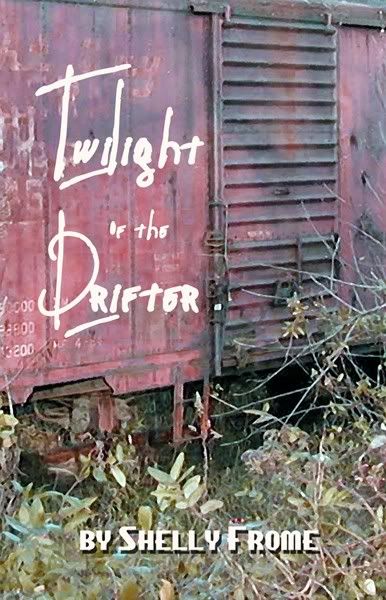
Tell us about your latest book Twilight of the Drifter.
 Twilight of the Drifter is a crime story with southern gothic overtones. It centers on thirty-something Josh Devlin, a failed journalist who, after a year of wandering, winds up in a Kentucky homeless shelter on a wintry December.  

Soon after the opening setup, the crosscurrents go into motion as Josh comes upon a runaway named Alice holed up in an abandoned boxcar. Taken with her plight and dejected over his own squandered life, he spirits her back to Memphis and his uncle’s Blues Hall Café.  From there he tries to get back on his feet while seeking a solution to Alice’s troubles. As the story unfolds, a Delta bluesman’s checkered past comes into play and, inevitably, Josh finds himself on a collision course with a backwoods tracker fixated on the Civil War, the Civil Rights Movement and the bluesman. By extension, Josh is also unwittingly up against the machinations of the governor-elect of Mississippi.

In a sense, this tale hinges on the vagaries of chance and human nature. At the same time, some underlying force seems to be seeking closure and long overdue redemption.

Was there a part of this story you found difficult to write?
The only thing that was difficult was allowing the story to unfold while, at the same time, incorporating all the threads. For instance, Roy, the backwoods tracker, often harkens back to the tactics of his Confederate ancestor and his own escapades during the Civil Rights days in Oxford, Mississippi while attempting to make sure that long hidden secrets never see the light of day. At the same time, Alice, the runaway, is suffering from temporary amnesia as she goes through her own story arc. And then there is AdaMae, Alice’s visionary aunt, who worries that Alice may be in league with the devil. As things progress, Josh becomes involved with LuAnn, a luncheonette manager who is also concerned about Alice’s plight when Alice takes off again. Not to mention the growing tension between Josh and Dewey the bluesman who becomes increasingly under the gun.  And on and on, it goes.  

What inspired the idea for Twilight of the Drifter?
It all started when a friend of ours invited us down to the hill country of Mississippi who’d inherited a backwoods cabin and was in the process of fixing it up. At one point, he suggested that he and I take an exploratory walk. Following a narrow overgrown path, soon we became entangled in briars, edged past some barbed wire as the terrain sloped down and eventually came across waterlogged limbs sticking out like menacing pitchforks. At that moment, I turned to him and said, “Bob, do you have any idea where we are?”

He gave me a half-wary half-mischievous look and said, “Shelly, I believe this here is Wolf Creek.”
 Then and there something began to percolate. That selfsame feeling there were buried secrets here that would never see the light of day.

What drew you to write in the genre crime/mystery novels?
 Perhaps the best way to explain it stems from something the renown actress Julie Harris once told me. “In one way or another, the given circumstances have to be a matter of life and death. Otherwise, why go to all the trouble?” Put another way, the journey has to be worth the candle. In the case of the Drifter, we’re talking about a mysterious calling to right a great wrong.

As a writer who is also a film buff, a movie critic, a professor of film as well as theater, and the author of a book on screenwriting, there’s another major factor. As the movie camera takes you anywhere and everywhere, so does the central character. And the places you go have a distinct character of their own affecting everything that happens. And that’s at least one reason that writing within the parameters of this genre results in passages my readers find so engrossing and vivid.    

Does your experience as an actor bringing characters to life help you to do the same with the characters in your novels?
  Absolutely. Every character who appears has a through-line and a stake in the action. Everyone is coming from somewhere, motivated and changes because of who they are and the ongoing give-and-take. It’s all a process of becoming. In a wonderful, mysterious way there can be no manipulation on my part because everything would stop until I backed off and allowed people to be true to themselves. In a sense, there’s always the question, Who am I? What do I want? What stands in my way? What now, given the way things are going, in view of what I need and what I’m capable of?

And, needless to say, I play every character.

What do you feel are the key elements for a good mystery?
I think there has to be a fascinating dilemma involving three-dimensional characters, intelligent protagonists and antagonists and a provocative setting. Some unfolding journey far beyond the puzzle solving musings of Miss Marple and Hercule Poirot and the one-dimensional stock characters and stick figures they encounter.

What is your favorite crime/mystery television show or movie?
 I don’t have any favorites. But I’m sure the same guidelines apply to crime shows and movies I’m drawn to like the Inspector Morse series on BBC, old classic movies like The Maltese Falcon and recent films like The Talented Mr. Ripley and Michael Clayton.

What is your writing ritual?  Do you write daily, have a word count/page goal, have a certain time of day you write better than others or a certain place that helps you focus?
 In one way or another, I seem to be always writing. Once a noted playwright told me that every time he’d ask another noted playwright how his latest was going, the answer would always be, “It’s coming along. I’m still working on it.” Eventually the answer would be, “Ah, it’s finally finished. Now all I have to do is write it down.”  I simply follow the energy. Perhaps it’s polishing a scene and that usually takes place later in the day tapping away on the computer. Research consists of going places, interviewing people and/or experts in their field, looking things up, etc. But given the fact that I’m an incurable storyteller, a lot of daydreaming goes on morning, noon or night.  

Do you have any projects you’re working on?
 I've just started a new project based on a character who looks a lot like James Dean who unwittingly keeps getting in trouble and is now a person of interest in an untimely death.

What would you like to say to readers and fellow writers?
 There seems to be a flood nowadays of self-published e-books and print on demand. Writers and would-be writers who seem to think it’s all about cranking stuff out and then spending a great deal of energy on promotion tactics on the Internet. There is a huge difference when the work is the result of a slow simmering process, editorial oversight and more before the novel is ready to be distributed. In other words, there’s a question here: How much heart and soul, art and craft went into this final product? There’s a question here for both readers and fellow writers to ponder.

Where can we find Shelly Frome and Twilight of the Drifter?
 Amazon (paperback and Kindle)
Barnes and Noble (paperback and Nook)
@shellyFrome (Twitter)  


Monday, June 11, 2012

Author Chat with MS Spencer

Please join us in welcoming M.S. Spencer to the Ludis. She'll be chatting with us today about her recently released novel and thoughts about how romance writers are perceived. There might even be a secret or two that gets loose! So refill that glass of sweet tea and enjoy our chat. Don't forget to leave some comment love. 
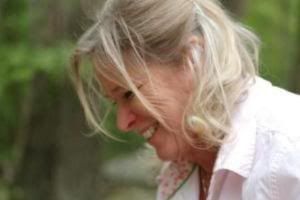


Author M.S. Spencer

What inspired you to begin writing?
Like most writers, I’ve been writing since I could hold a pencil in my chubby baby fingers. I wrote a full-length murder mystery, which opened to relatively rave preliminary reviews by an agent. Unfortunately, she decided agenting wasn’t for her and quit before we got any further. Then a few years ago I was laid up for six months, and one night had a vivid dream. That (and the enforced rest) inspired me to write my first novel, Lost in His Arms, published in 2009 (shameless plug: now in print through Amazon : 

Are you a fulltime author or do you have a ‘day job’? Does it ever play a role in your writing?
I write pretty much full-time. I have a part-time job as Executive Director of the Friends of the Torpedo Factory Art Center—giving me access to wonderfully eccentric artists and an office with a view of the Potomac and Old Town Alexandria waterfront.

According to your bio at Secret Cravings Publishing, you’ve lived in many places around the world. Do your experiences abroad affect your stories? How?
Of course. I try to include a visit to Paris (not always successfully) in almost every story. The only problem is I find my memories of some places are not clear enough to use without extensive further research to make the settings precise and accurate. Sometimes, (sigh) this means a repeat trip to some wonderful place.

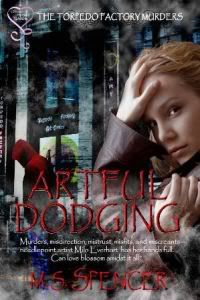
You have a new novel on the shelves Artful Dodging: the Torpedo Factory Murders. Please tell us a bit about it.
My latest release takes place in Old Town Alexandria, an historic cobble stoned city on the Potomac River in Virginia.  It follows the adventures of several artists at the Torpedo Factory Art Center. An old munitions factory on the waterfront, The Center lay abandoned after World War II until the 1970s, when an intrepid band of local ladies convinced the city to lease it to them. Today it houses 82 studios, the Art League, the Friends of the Torpedo Factory, and an Archaeology center.

Released April 24, 2012 by Secret Cravings Publishing
65,000 words; ISBN 978-1-61885-250-2
Romantic Suspense/Murder Mystery; M/F; Heat rating: 2 flames

Blurb:
Waiting out the rain, Milo Everhart takes stock of her widowhood and the handsome man standing in the door to the bar.  Little does she know she will meet that man again and again under both passionate and terrifying circumstances.

Tristram Brody waits for his date, too conscious of the beautiful woman sitting by the door. Little does he know that she will hate him for trying to destroy her beloved art center, and even suspect him of murder. Nor that she will be drawn inevitably into his arms.

Little does either of them suspect they will be embroiled in not one, but two murders, in which the fate of the Torpedo Factory, an art center housed in an old munitions factory on the waterfront in Old Town Alexandria, will be decided.

What was the hardest part about this story to write?
Because the story mirrors real events (some of which I didn’t anticipate), the most difficult part was to disguise real characters and change the course of events to make sure it remained fiction.

Do you have a favorite scene, why is it your favorite? Please share it with us.
Oh definitely, the scene where she finds the body. Or maybe the scene with reporters acting like, well, reporters. Here’s a bit of that (there’s more but it would reveal too much plot):

The same anchor babe as before—only this time in a slinky knit dress and bright pink lipstick—announced in a voice bordering on hysteria that there were new developments in the Doyle antique robbery.

“Martin, can you tell us what the police said at the press conference today?”

Martin tore off his makeup bib to reveal sartorial resplendence unmatched by any other non-cable correspondent. “Actually, no, Rebecca.” He straightened his purple Versace tie and faced the camera with what he obviously thought was a compelling smile. “I’m standing here in front of the warehouse where the police located the first stash of stolen goods. Of course, they were removed yesterday, but I’m still here in hopes of more news.

Anything rather than schlep down to the police station where they held the news conference. For that, we go to my intern Jimmy. Jimmy?”

He didn’t really say that. Did he?

Jimmy, a bright-eyed, big-eared young college student, looked about to wet his pants.

“Rebecca! Rebecca! Can you hear me?” He tapped his earpiece, almost knocking the anchor babe off her perch and revealing way too much of a fairly decent pair of legs.

“Yes, Jimmy.” She shook her hair out and shot a surreptitious look at the mirror on her desk. “What can you tell us?”

What are three things not many people know about you?
Oh, let’s see…One thing: many of my heroines suffer from claustrophobia. That’s from me. Oh yeah, and at age 13, I met the Woolworth heiress, Barbara Hutton and had tea in her palace (complete with suit of armor and her portrait as a flapper) in Tangier, Morocco. Or this: my Masters thesis in Structural Anthropology dissected the Kebra Nagast, the Book of Kings, which is the national myth of Ethiopia. The Ethiopians believe that during the famous visit of the Queen of Sheba to Solomon they conceived a son, who became the first emperor of Ethiopia.

What do you feel are the key elements to writing romantic fiction?
In no particular order: 1) maintaining an accurate time line; 2)  providing depth to secondary characters as well as primary ones; and 3) adding setting and description that reinforces and undergirds the mood and plot of the story.

Silk or satin sheets?
Neither---they’re both too slippery! I borrowed some black silk sheets once and, while I enjoyed the part where I was awake, sleeping was difficult. And no jersey knit either! Nice 500-thread-count Egyptian cotton, that’s the ticket.

Do you feel romance writers have a stigma? (good or bad)
Interesting question. When people ask me what I write I usually grin and say “Chick lit.” If you give your answer a little fillip of titillation they respond positively. On the other hand, many people still think of romance as the formulaic old Harlequins—I try to explain that it covers many genres now. Romance is the counterpoint to so-called modern fiction. Heroes are heroes, not anti-heroes; the plots contain challenges to be overcome rather than retreated from; and the ending is always happy. Given that, who’d want to read some novel riddled with angst and ennui?

Do you have a new book in the works? Can you tell us about it?
I have 2 WIPs: (1) The Fish Tales: the Mote Marine Murders (working title)—set in Sarasota, Florida, we find our heroine Tessa Diamond dealing with romance, the Russian mafia, smuggling, and sea turtles, not necessarily in that order. (2) “Lapses of Memory: Love in the Air”--a romantic story of two people who meet every few years on an airplane as love (not to mention flight technology) grows.

What would you like to say to fellow readers and writers?
I would be really, really happy if you enjoy my books and recommend them to others.

You can find M.S. Spencer and her books here: